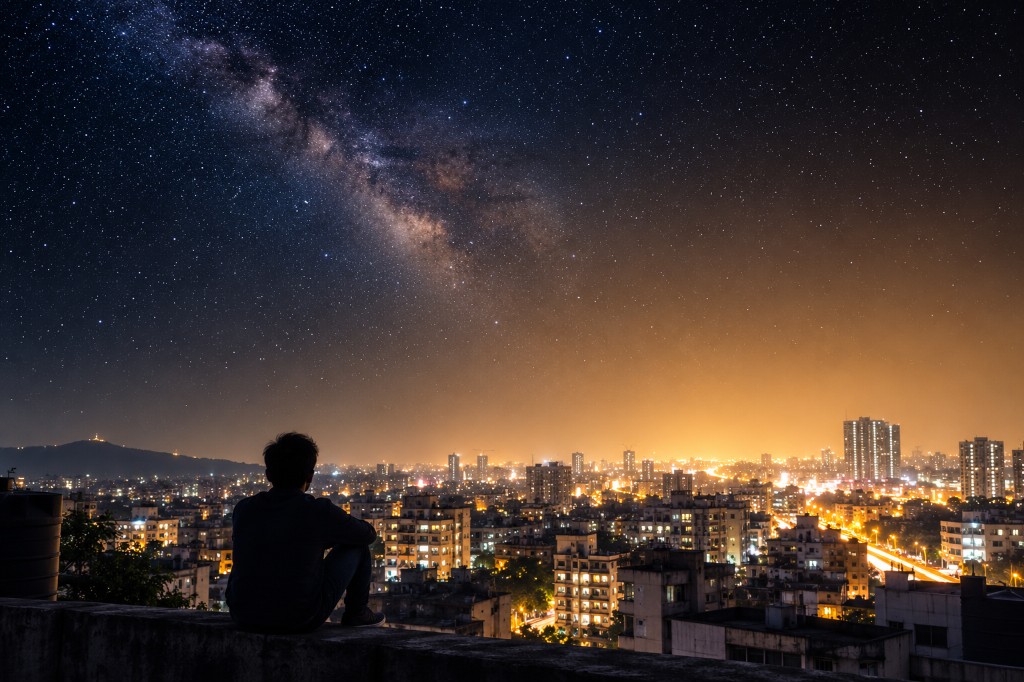

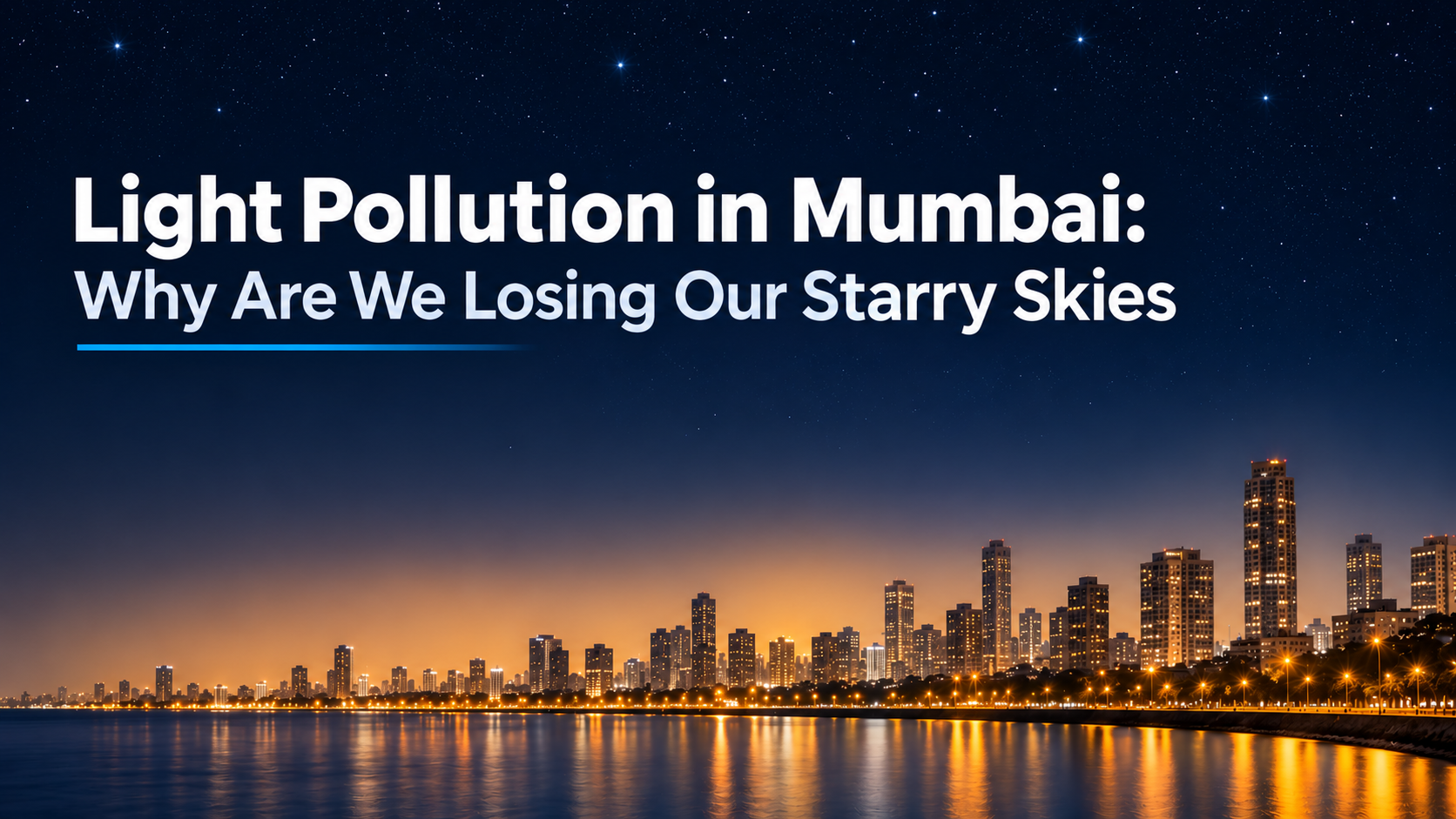
Think back to the last time you looked up from a Mumbai street and saw a sky full of stars. For most of us, the honest answer is "I can't remember." The city that never sleeps has also stopped letting us see the night. Light pollution in Mumbai is no longer a niche concern for astronomers. It is an everyday urban problem that affects our sleep, our wildlife, our electricity bills and our connection to the cosmos.
Why Is Mumbai So Bright?
Several factors combine to make light pollution in Mumbai especially intense.
Relentless construction. Metro projects, flyovers and redevelopment sites run under powerful floodlights through the night, often with the beams pointed outward instead of down at the work area.
Commercial and advertising lighting. Giant LED hoardings, illuminated facades and shop signs stay on long after the customers have gone home.
Beautification and decorative lighting. Fairy lights wrapped around trees, lit-up promenades and festival décor are meant to be temporary, but they often stay up for months. Concerns about such lighting even reached the Bombay High Court, which examined the issue of decorative lights on the city's trees.
Unshielded street and security lights. Many fixtures throw light in every direction, including straight up, rather than onto the road or pavement where it's needed.
The LED paradox. LEDs are energy-efficient, but cheap and bright, so cities install more of them. Many are also blue-rich, which scatters more in the atmosphere and is more disruptive to living things.
Satellite-based research on India found that Maharashtra was among the states where areas of very high light pollution intensity grew between 1993 and 2013, driven by urban expansion and industrial growth. The trend has not exactly reversed since.
More Than Lost Stars: The Real Costs
It's easy to dismiss this as a loss of beauty, but the consequences go deeper.
Human health. Our bodies run on a circadian rhythm that depends on natural cycles of light and dark. Bright light at night, especially blue-rich light, suppresses melatonin, the hormone that helps us sleep. Poor sleep, mood disturbances and long-term health risks are linked to chronic exposure to artificial light at night.
Wildlife. Birds, insects, turtles and bats all depend on darkness for navigation, feeding and breeding. Mumbai sits on a major migratory route, and bright urban lighting can disorient birds. The National Green Tribunal has acknowledged light pollution as an environmental concern, including in connection with the deaths of flamingos near Navi Mumbai in 2024.
Energy and money. Light that escapes into the sky does nothing useful. It is electricity paid for and wasted, along with the carbon emissions that come with generating it.
Culture and wonder. For generations, the night sky inspired stories, festivals, calendars and science. A child growing up in Mumbai today may never see the Milky Way, and that is a quiet but real loss.
A Legal Blind Spot
Here's the uncomfortable part: India does not formally regulate light as a pollutant the way it does air, water or noise. There are no mandatory national limits on glare, skyglow or light spill. Citizens who complain about intrusive lighting, such as residents along Marine Drive who have filed repeated complaints, often hear that no clear norms exist for authorities to enforce.
There is a glimmer of progress. On National Space Day in August 2025, Maharashtra's Chief Minister announced the intention to make the state the first in India to draft a Dark Sky Conservation Policy. If it takes shape, it could set standards for outdoor lighting and become a model for other states.
Save Darkness: A Community Voice for the Night
Policy needs public pressure behind it, and that's where citizen-led efforts matter. Save Darkness is an initiative of the Harsha Joshi Foundation and is described as India's first NGO dedicated to fighting light pollution. It is community-driven and focuses on reducing the excessive and intrusive use of artificial lighting while promoting more responsible lighting practices.
Initiatives like Save Darkness do something crucial: they make darkness a topic worth talking about. Most people have never thought of a glaring floodlight as pollution, because we have been taught that more light always means more safety and progress. Raising awareness, bringing citizens together and nudging planners toward better lighting design is how that mindset starts to shift. If you care about light pollution in Mumbai, following and supporting the work of Save Darkness is a practical first step.
What Can Be Done? Practical Solutions
The good news is that, unlike many urban problems, light pollution is among the easiest to fix. We don't need to give up lighting; we need to light smarter.
For city planners and authorities:
-
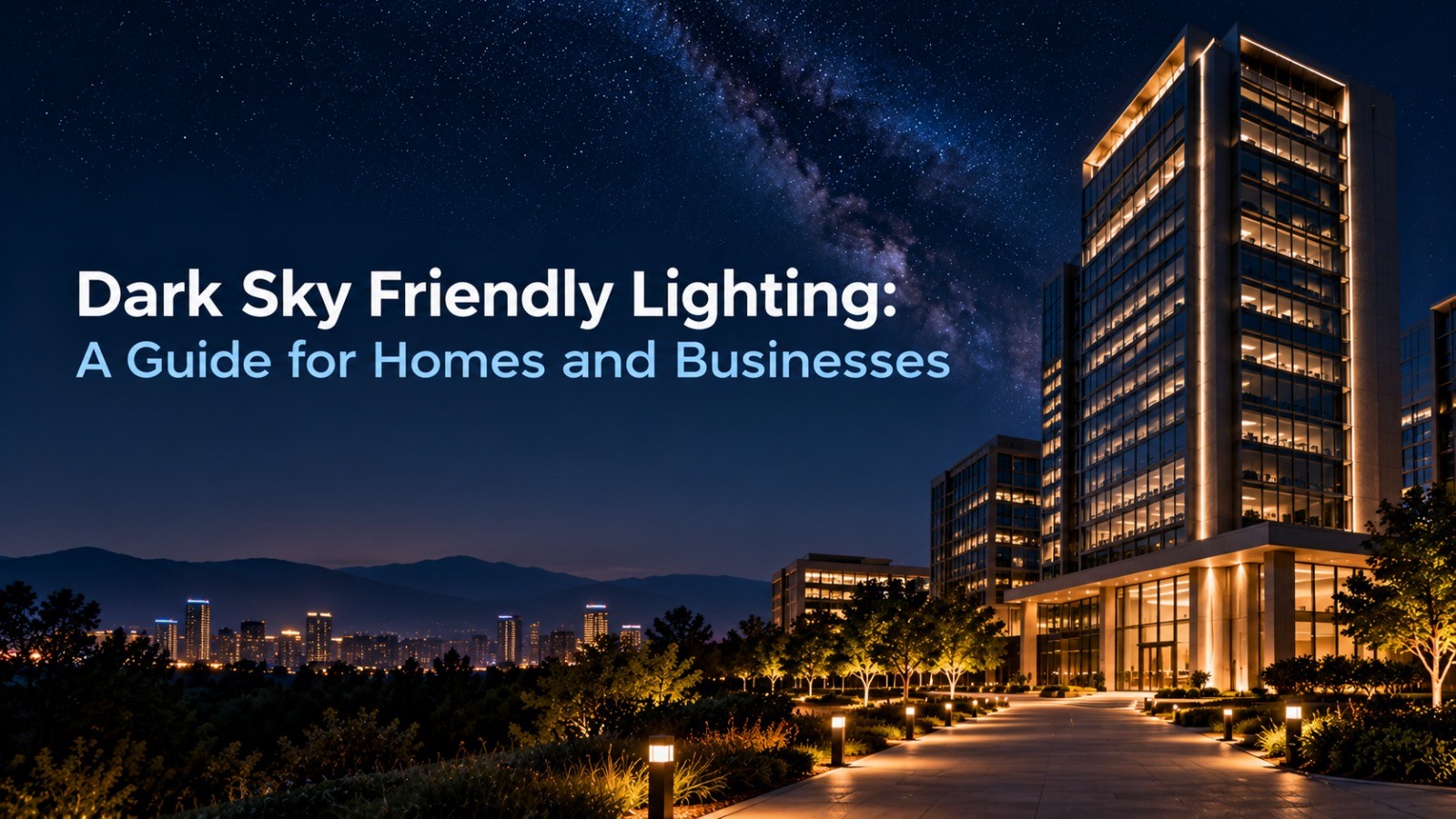
Use fully shielded fixtures that direct light downward.
-
Choose warmer colour temperatures (around 3000K or lower) instead of harsh blue-white LEDs.
-
Introduce dimming and timers for streetlights, hoardings and facades after late-night hours.
-
Set clear limits on construction-site and advertising illumination.
-
Create dark-sky-friendly zones near mangroves, wetlands and parks.
For housing societies and businesses:
-
Switch off decorative and facade lighting when it isn't needed.
-
Use motion sensors for security lights.
-
Aim lights down and only at the area that needs lighting.
For individuals:
-
Use warm, low-wattage bulbs outdoors and curtains indoors.
-
Skip permanent decorative lights on trees and balconies.
-
Turn off unused lights, and encourage neighbours to do the same.
-
Speak up. Report excessive lighting to your society or local ward office, and support organisations like Save Darkness.
Better lighting can also improve safety. Glare actually makes it harder to see, while well-shielded, evenly distributed light reduces harsh shadows and helps both drivers and pedestrians.
Conclusion: Reclaiming the Night
Mumbai will never be a pitch-dark village, and nobody is asking it to be. But there is a wide gap between a lively, well-lit metropolis and one that has erased the night altogether. Closing that gap would give us better sleep, healthier ecosystems, lower energy bills and perhaps, on a clear evening, a few more stars above the skyline.
The next time you step outside after dark, look up and notice what is missing. Then ask what it would take to bring it back. Light pollution in Mumbai is a problem we created, which means it is one we can solve, one switch, one fixture and one conversation at a time.