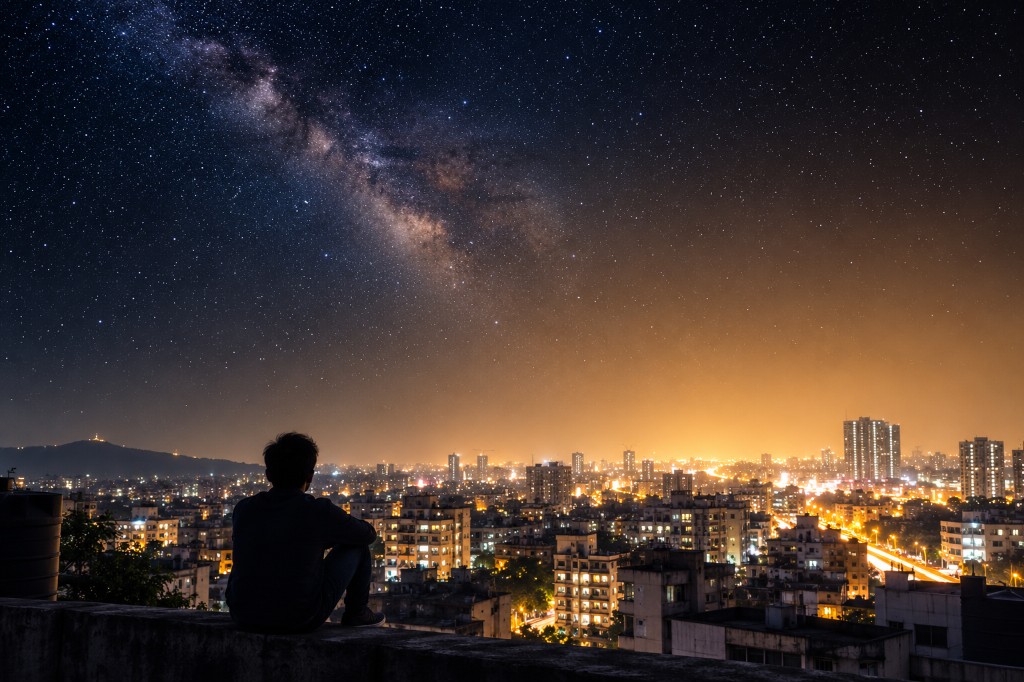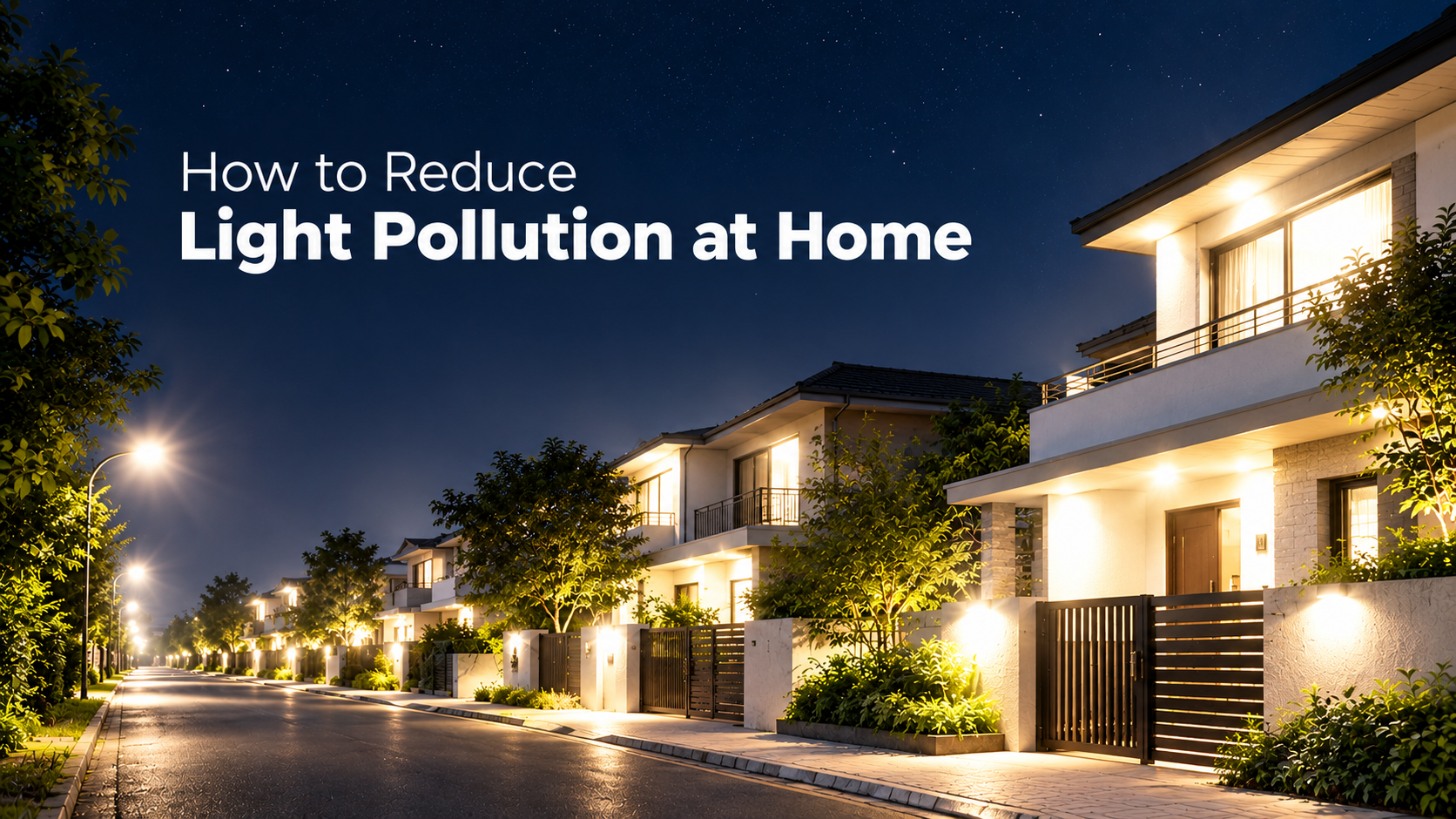

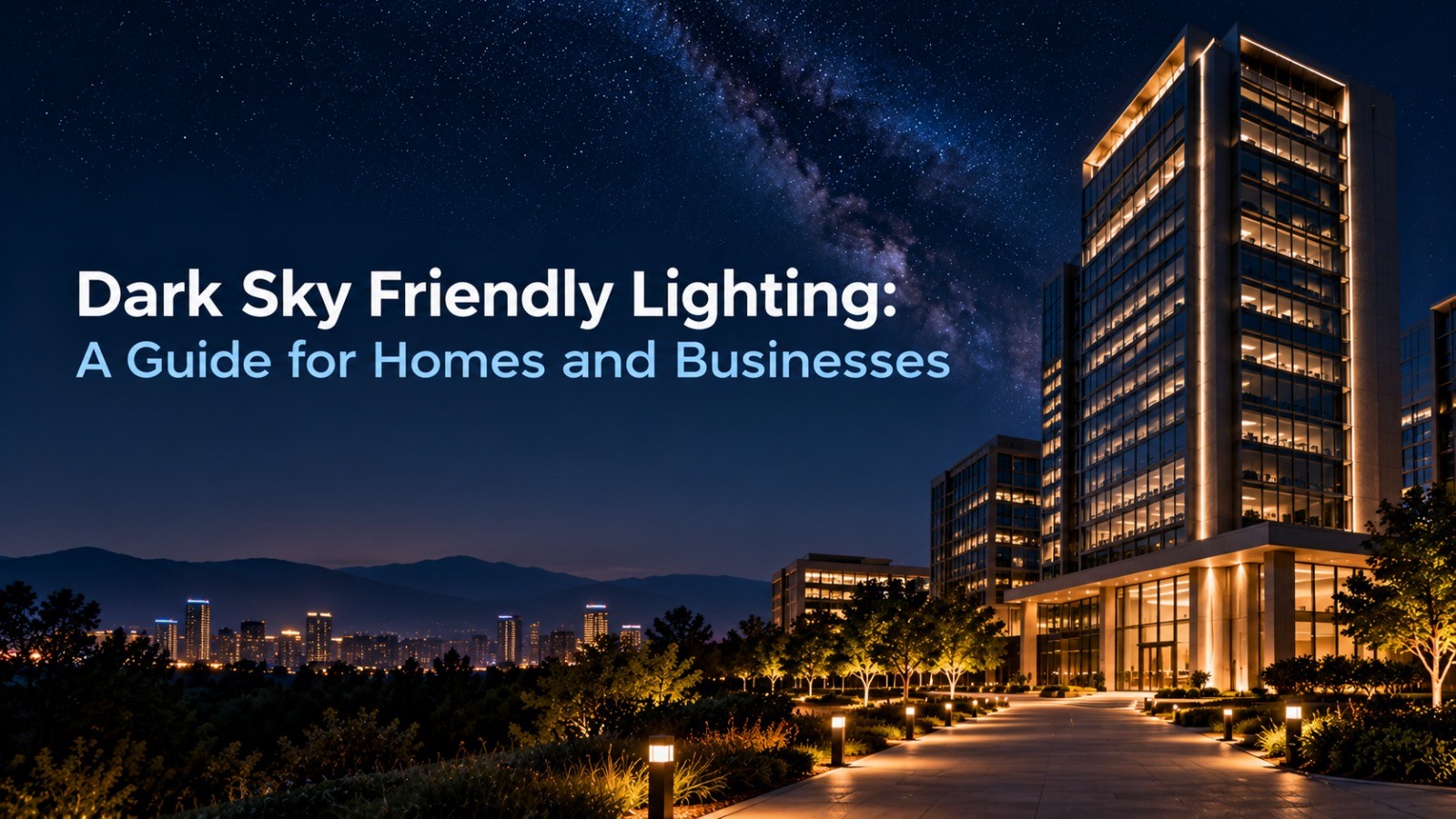
Step outside on a clear night in most towns and cities, and you'll notice something missing: the stars. Where our ancestors saw thousands of points of light, many of us now see a handful. The cause is not clouds or haze but our own outdoor lighting, which spills upward and outward into the night.
The good news is that this is one of the most fixable environmental problems we face, and it is the cause behind the Save Darkness initiative, which works to protect the night sky for everyone. Dark sky friendly lighting is a practical approach to outdoor illumination that puts light where it's needed, when it's needed, and nowhere else. It doesn't mean living in darkness. It means lighting smarter, and the benefits reach well beyond stargazing.
Three Principles: Targeted, Appropriately Bright, and Well Controlled
At its core, dark sky friendly lighting rests on three ideas. Apply them together and you can cut unnecessary illumination dramatically without sacrificing safety or security.
1. Targeted: Aim Light Only Where It's Needed
A light that shines in every direction mostly lights up things nobody needs to see: the sky, the neighbor's yard, the treetops. Targeted lighting solves this by directing light downward onto the specific surface or task area, such as a doorstep, a walkway, or a parking bay.
The easiest way to achieve this is with fully shielded fixtures, which have a cover or housing that blocks light from escaping above the horizontal plane. Look for fixtures where the bulb or LED is not visible from the side, and where the light source sits inside the housing. Avoid bare bulbs, globe lights, and upward-facing floodlights, which scatter light in all directions.
2. Appropriately Bright: Use Only as Much Light as the Task Requires
More light is not the same as better light. Overly bright fixtures create harsh contrast, deep shadows, and glare. When your eyes adjust to a bright light, the darker areas just beyond it become harder to see, which can reduce safety rather than improve it.
Choose the lowest brightness that does the job. A residential path or porch often needs far less light than people assume, and a modest, even glow is usually safer than a single blazing floodlight. When shopping for LEDs, check the lumen rating rather than wattage, and match it to the actual task.
Color matters too. Cooler, blue-rich light (above roughly 3000K) scatters more in the atmosphere and has a greater impact on wildlife and human sleep. Warm white light, ideally 3000K or lower, is gentler on the night environment, and amber or other warm tones are better still in sensitive areas.
3. Well Controlled: Light On Only When Needed
Even a perfectly aimed, well-sized light is wasteful if it burns all night over an empty yard. Controls ensure that light is available when people are there and absent when they're not. Useful options include:
-
Timers that switch lights off after a set hour
-
Motion sensors that activate lighting only when someone approaches
-
Dimmers that lower output during quiet late-night hours
-
Smart controls that let you schedule, adjust, and monitor lighting from a phone
Together, these tools can reduce a fixture's running hours and brightness significantly, with savings in both energy and maintenance.
Tips for Homeowners
A dark sky friendly lighting plan for a home can be put in place in a weekend, and it rarely costs much. Start by walking around your property after dark with a notebook. Note every light that shines into the sky, every glaring bulb, every fixture lighting a wall nobody uses, and any light that reaches a neighbor's window. That list becomes your to-do list.
-
Replace unshielded fixtures with fully shielded, downward-facing ones, starting with entrances and garages. Old globe lanterns and bare-bulb wall lights are the biggest offenders, since they throw much of their light sideways and upward.
-
Swap bright bulbs for warm, lower-output LEDs. Look for 3000K or lower, with just enough lumens to see steps and door locks. Most porches stay comfortably usable at a fraction of the brightness people expect.
-
Add motion sensors to security and driveway lights so they work as a deterrent. A light that switches on suddenly gets noticed far more than one that burns all night and fades into the background.
-
Use path lights sparingly, low to the ground and spaced to mark the route rather than flood the lawn. Shielded bollards or small step lights usually work better than tall lamps.
-
Rethink decorative and landscape lighting. Skip uplights aimed at trees and walls, or aim them tightly and put them on a timer so they go off by bedtime.
-
Close curtains or blinds at night to keep indoor light from escaping, and switch off lights in rooms nobody is using.
Your neighbors will thank you, you will likely sleep better, and you may even rediscover the pleasure of a visible Milky Way from your own backyard. Small upgrades add up quickly when a whole street adopts dark sky friendly lighting.
Tips for Businesses
For commercial properties, lighting often runs all night, which makes the opportunity for improvement far larger than at home. Businesses that adopt dark sky friendly lighting typically see lower energy bills, reduced glare for customers and staff, and a stronger reputation for environmental responsibility. Applied across a whole site, a handful of changes can noticeably cut running costs.
-
Audit your site after dark. Walk the property with facilities staff and identify over-lit areas such as parking lots, building facades, loading docks, and signage. Photograph glare and spill so you can show before-and-after results.
-
Use shielded, full-cutoff fixtures on poles and building walls so light stays on the ground, not in the sky. Replacing a few high-mounted floodlights often does more than dozens of small tweaks.
-
Dim or switch off after hours. Many car parks and storefronts can safely drop to a low level once closed, brightening only when motion is detected. Schedule it through a central controller so it happens without anyone having to remember.
-
Light signs from above, downward, rather than from below, and turn them off when the business is closed. Internally lit signs should use dimmable, warm-toned lighting.
-
Avoid over-lighting for security. Even, moderate lighting with no glare generally improves visibility and deters crime better than harsh floodlights that create blinding contrast and deep shadows. Security cameras also perform better under even light.
-
Brief staff and contractors. Write lighting standards into maintenance contracts so replacement lamps match the approved brightness and color.
Many municipalities now offer lighting guidelines or incentives, so check local regulations before upgrading. Telling customers about the change, with a short note on your website or signage, also turns responsible lighting into a visible sign of your values.
The Benefits of Lighting Less, Better
Switching to responsible outdoor lighting delivers real, measurable advantages:
-
Lower energy costs from reduced wattage and fewer operating hours
-
Better visibility thanks to less glare and more even illumination
-
Improved sleep for you and your neighbors
-
Protection for wildlife and local ecosystems
-
A clearer night sky for everyone to enjoy
Conclusion
Protecting the night doesn't require sacrificing safety, convenience, or style. Dark sky friendly lighting simply asks us to be more thoughtful: aim light precisely, choose the right brightness and color, and use controls so it works only when it's needed. Whether you're updating a porch light or redesigning a commercial car park, each small change reduces wasted light and brings the stars a little closer back into view.
Join the Save Darkness initiative by starting with one fixture this week. Shield it, soften it, and put it on a sensor. The night sky will be better for it.