
“What if the light that helps us see at night is slowly making it impossible for wildlife to survive?
Imagine fireflies disappearing from gardens, birds losing their way across the night sky, and baby sea turtles moving away from the ocean because they are confused by artificial lights. These are some of the hidden consequences of light pollution. While artificial lighting makes our cities brighter and more convenient, it can also disrupt nature in ways we often overlook. Darkness is essential for countless species, and when we take it away, the effects can spread throughout entire ecosystems.
1. Birds Lose Their Way
Many bird species migrate at night, using natural environmental cues to navigate. Bright buildings, illuminated towers, and city lights can disorient migrating birds and increase their risk of colliding with buildings. Artificial lighting can also interfere with their natural movement and behaviour, making migration more challenging.
Published research: The Influence of Artificial Light at Night and Polarized Light on Bird-Building Collisions (2020), published in Biological Conservation.
2. Sea Turtles Struggle to Find the Ocean
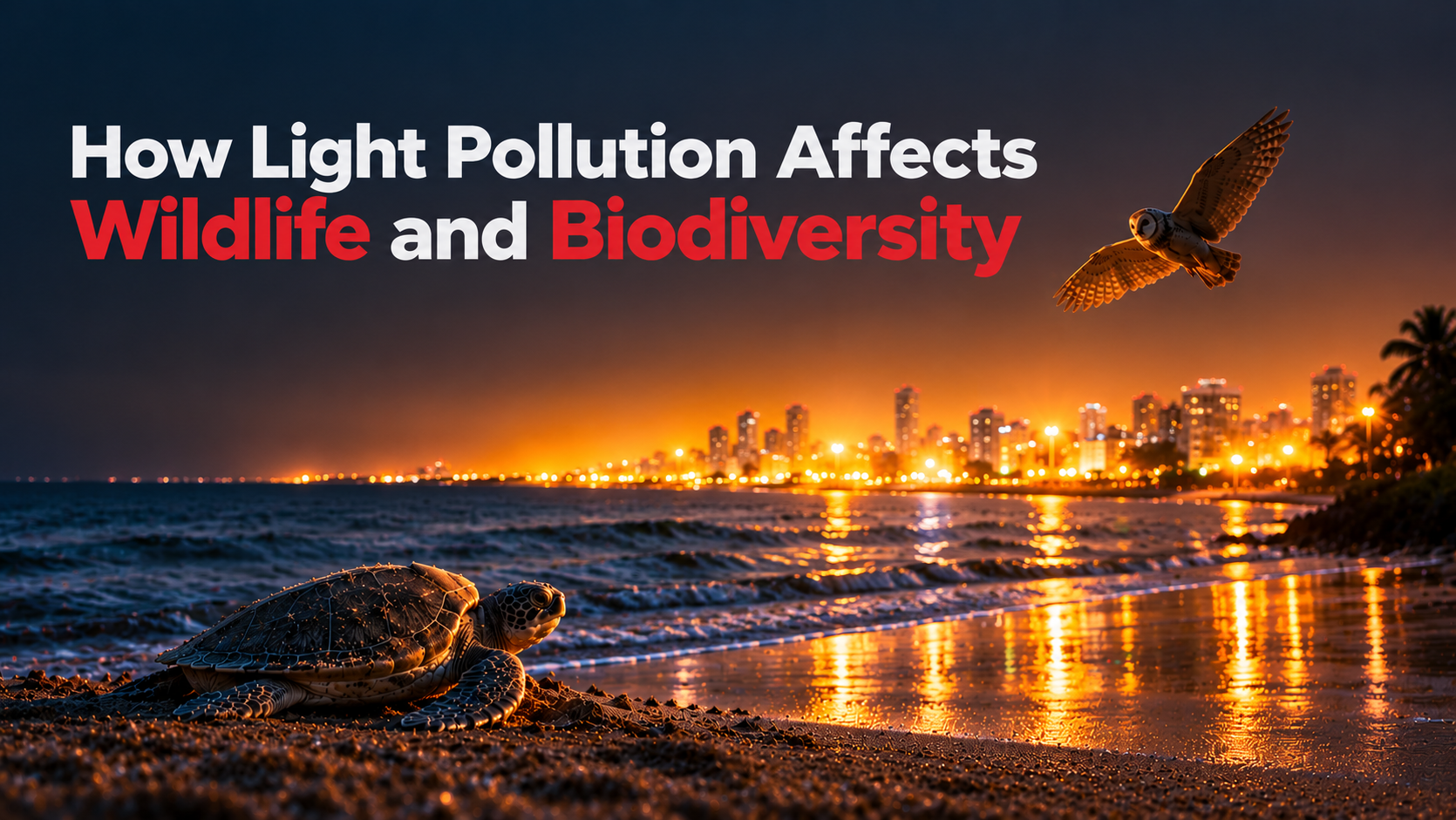
Newly hatched sea turtles naturally use visual cues to find their way towards the ocean. However, artificial lights from hotels, buildings, roads, and beachside properties can confuse their sense of direction, leading them away from the sea. This can expose them to predators, exhaustion, and other dangers, reducing their chances of survival.
Published research: The Effect of Artificial Light at Night on Sea Turtle Hatchling Early Dispersal: A Systematic Review of Methods, Impacts and Findings (2025), published in Biological Conservation.
3. Fireflies and Insects Face Growing Challenges
Fireflies use flashes of light to communicate and attract mates. Artificial lighting can interfere with these signals, making it harder for them to reproduce. Other insects may be attracted to artificial lights, disrupting their movement, feeding, and interactions with other species. Since insects support pollination and provide food for birds, bats, and other animals, their decline can affect the entire ecosystem.
Published research: Artificial Light at Night Disrupts Species Interactions and Changes Insect Communities (2021), published in Current Opinion in Insect Science.
4. Nocturnal Animals Lose Their Natural Rhythm
Many animals, including bats, owls, frogs, and small mammals, depend on darkness to hunt, find food, reproduce, and avoid predators. Artificial lighting can change their activity patterns and influence where they feed or move. Some species may avoid illuminated areas, while others may be attracted to them, disturbing the natural balance between predators and prey.
Published research: Artificial Light at Night and Terrestrial Fauna: A Review on Research Trends and Knowledge Gaps (2026), published in Biological Conservation.
5. Marine Life Faces Hidden Threats
Artificial light reaching rivers, coastlines, and oceans can affect marine organisms, including fish, plankton, seabirds, and sea turtles. Research has identified potential disruptions to feeding, movement, predator-prey relationships, and coral spawning. As coastal development increases, artificial light entering natural waters can place additional pressure on marine ecosystems.
Published research: Impacts of Artificial Light at Night in Marine Ecosystems—A Review (2022), published in Global Change Biology.
6. Plants and Ecosystems Are Disrupted
Nature follows natural cycles of daylight and darkness. Artificial lighting can alter the environmental signals that help regulate plant growth, flowering, seasonal changes, and interactions with pollinators. When these natural timings change, the relationships between plants, insects, birds, and other organisms can also be affected.
Published research: Impacts of Artificial Light at Night on Biological Timings (2017), published in Annual Review of Ecology, Evolution, and Systematics.
7. Biodiversity and Food Chains Are at Risk
Every species has a role in maintaining the balance of nature. Insects pollinate plants, birds disperse seeds, and predators help regulate animal populations. When artificial light affects one species, the consequences can spread to others that depend on it. Over time, these disruptions may alter ecosystems and threaten biodiversity, the variety of life that keeps our planet healthy.
Published research: Understanding and Managing Ecological Light Pollution (2026), published in Nature Reviews Biodiversity. This review examines how artificial light affects biological processes and ecosystems, and outlines approaches to reducing its impact.
What Can We Do to Protect Wildlife?
Reducing light pollution does not mean living in complete darkness or compromising safety. Small, thoughtful changes can make a meaningful difference.
Conclusion: Protect the Night, Protect Biodiversity
The effects of light pollution on wildlife show why natural darkness is important. Artificial light can disrupt migration, feeding, reproduction, and ecological relationships, putting biodiversity at risk.This biodiversity is essential for keeping ecosystems healthy.
By reducing unnecessary lighting and adopting responsible lighting practices, we can help wildlife thrive while still meeting human needs.
At Save Darkness , we believe protecting natural darkness means protecting life itself. Every responsible lighting choice can contribute to a healthier environment and a more sustainable future for wildlife and biodiversity.
The question is not how brightly we can light up the night, but how wisely we can use light without harming the life around us.