
Save Darkness

Wildlife & Light Pollution

Darkness is not empty space. It is habitat.

Our Cause

Light Pollution Effects on Wildlife: Why Darkness Matters

Step outside on a clear night in most Indian cities and count the stars you can see. A generation ago, you'd have spotted hundreds. Today, you're lucky to find a dozen.

According to the World Atlas of Artificial Night Sky Brightness, more than 80% of the world's population now lives under light-polluted skies, and one-third of humanity can no longer see the Milky Way at all. The light pollution effects on wildlife run just as deep as the loss to our own view of the night sky scrambling migration routes, breaking reproductive cycles, and quietly pushing species toward decline.

This is light pollution: the excessive, misdirected artificial lighting that now blankets our cities, highways, and even our coastlines. We rarely think of it as pollution the way we think of smoke or plastic, because it doesn't linger in the air or wash up on beaches. But for wildlife, it is just as disruptive. Satellite studies tracking global nighttime brightness show artificial light expanding by roughly 2% every year, meaning the problem is not just present it's accelerating.

At Save Darkness, we believe darkness deserves the same protection we give clean air and clean water. Because for countless species, the night is not empty space. It is habitat.
Did You Know?

The scale of the problem in three facts

80%+

of people worldwide live under light-polluted skies

~2%

global increase in artificial nighttime lighting every year

Night

Sea turtles, migratory birds, insects, and pollinators all rely on natural darkness to feed, breed, and navigate

What Is Light Pollution?

Light pollution isn't a single phenomenon it's a family of related problems, all caused by artificial light at night (ALAN).

Skyglow

The orange haze visible over cities, caused by light scattering off dust and moisture in the atmosphere.

Glare

Excessive brightness that causes visual discomfort and reduces visibility, ironically making some areas less safe.

Light trespass

Light spilling beyond where it's needed, into homes, forests, or nesting grounds.

Over-illumination

Using far more light than a task requires, such as a floodlit parking lot at 2 a.m.

For most of Earth's history, life evolved around one predictable rhythm: bright days and dark nights. Every organism's biology, from hormone release to hunting behavior, is tuned to that cycle. Artificial light doesn't just add brightness it erases the darkness that countless species depend on to feed, breed, migrate, and survive.

Light Pollution Effects on Wildlife

Now recognized as one of the fastest-growing environmental concerns worldwide, artificial light touches nearly every stage of an animal's life cycle.

Navigation

Many species use moonlight, starlight, or the natural gradient between sea and sky to find their way. Artificial light overrides these cues, sending animals in the wrong direction entirely.

Feeding & predator–prey

Some predators exploit artificial light to hunt more efficiently. Insects drawn to porch lights become easy pickings, throwing local food webs off balance.

Reproduction & hormones

Light at night suppresses melatonin in many animals tied to sleep, breeding, and seasonal behavior. Birds have been recorded singing and nesting earlier under artificial light, out of step with food their chicks need.

Sleep & rest

Animals need uninterrupted dark periods to recover. Chronic light exposure elevates stress hormones and weakens immune responses over time.

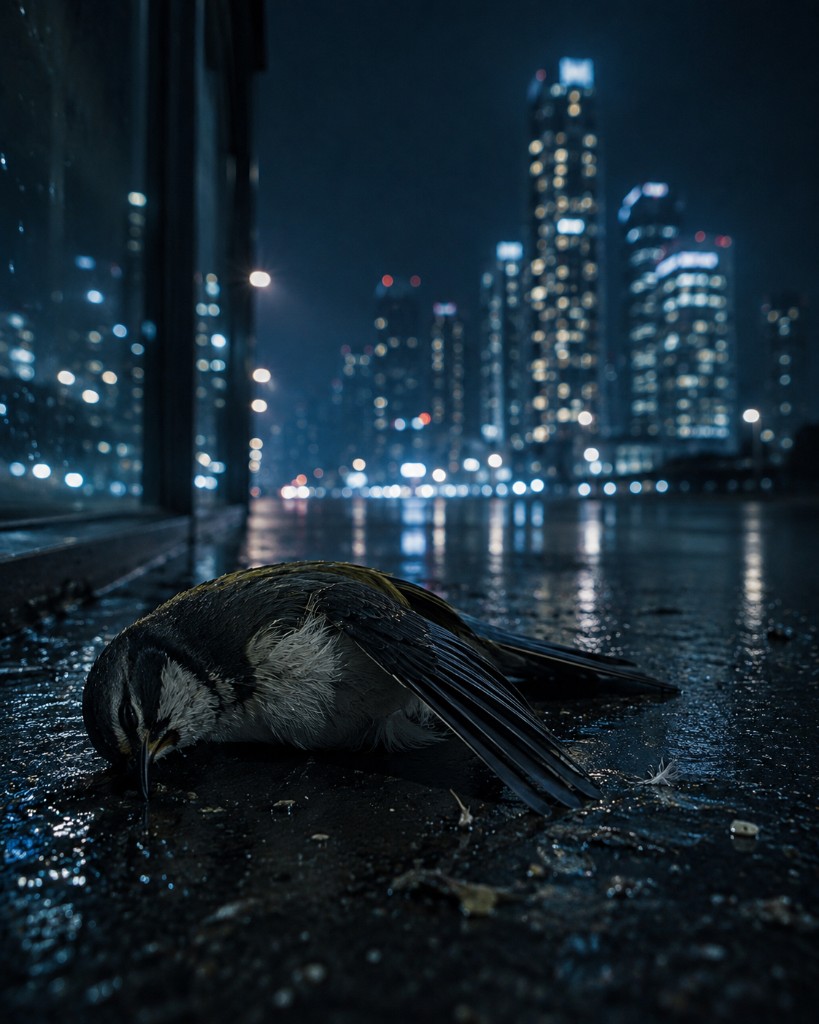
Bird at night against a lit city skyline

Flyways under threat

Artificial Light and Migratory Birds

Artificial light has become one of the biggest threats to migratory birds. As interactions with bright cities increase, many birds lose their natural navigation cues, become disoriented, and collide with illuminated buildings.

Most songbirds and shorebirds migrate at night, navigating by starlight and the Earth's magnetic field. Bright city lights disrupt this system, drawing birds off course and into illuminated urban areas sometimes from several kilometers away. Once pulled in, birds often circle the light source for hours, burning through the energy reserves they need for their journey a phenomenon researchers call the "fatal attraction" effect. Exhausted and disoriented, many collide with glass facades and lit buildings; global estimates put annual bird deaths from building collisions in the hundreds of millions.

India lies along major flyways used by migratory species arriving from Central Asia and Siberia every winter. Wetlands near Mumbai and Navi Mumbai have become flashpoints. In late 2024, the National Green Tribunal took up flamingo deaths near a lake in Navi Mumbai, noting that newly installed LED lighting appeared to impair the birds' vision and disorient them mid-flight. As Indian cities light up faster than ever, our wetlands and flyways need active protection not just admiration during migration season.

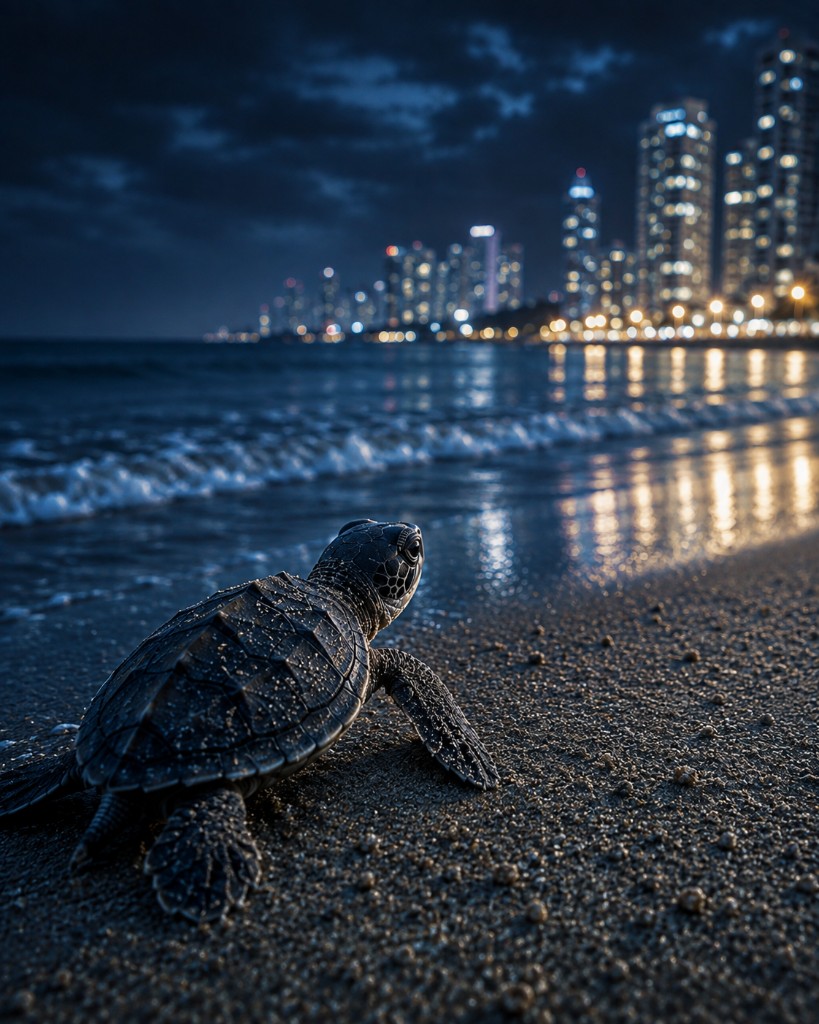
Sea turtle hatchling near a lit coastline

Coastal nesting

Sea Turtles and Light Pollution

One of the clearest examples of light pollution's toll on wildlife is turtle hatchling disorientation when hatchlings mistake artificial lights for the moonlit ocean.

Female turtles nest on dark beaches. Once hatchlings emerge, they instinctively crawl toward the brightest horizon which, on a natural beach, is the open sea reflecting moonlight and starlight. Artificial lighting from resorts, roads, and coastal development breaks this ancient cue. Hatchlings turn inland instead of seaward, where they die from exhaustion, dehydration, predation, or traffic.

Along Odisha's coastline home to some of the world's largest Olive Ridley nesting sites research at Rushikulya beach found that even distant beachfront lighting could throw off hatchlings' sense of direction, and that shorter-wavelength, high-intensity lights disoriented them the most. Long-wavelength, low-intensity amber or red lighting caused far less disruption guidance now used by coastal hotels and resorts near nesting beaches.

Olive Ridleys hold the highest legal protection under India's Wildlife Protection Act, yet unchecked coastal tourism and infrastructure growth continue to threaten the beaches they depend on.

Pollinators & Fireflies

The invisible collapse

How Light Pollution Affects Pollinators and Insects

It isn't just large, visible animals that suffer. Artificial lighting significantly reduces nighttime pollination in ways that ripple through entire ecosystems.

Moths, among the most important nocturnal pollinators, are drawn to artificial light instead of flowers. A widely cited European study in Nature found that meadows near streetlights saw nocturnal pollinator visits drop by roughly 62%, resulting in lower fruit set that daytime bees and flies couldn't fully make up for.

Fireflies face an even more specific threat: their mating system depends on precisely timed light flashes. Artificial light drowns out these signals, meaning fewer fireflies find mates a likely contributor to the vanishing displays many Indians remember from childhood.

Even bees aren't spared. Prolonged night lighting disrupts their rest and internal clocks. Multiply these disruptions across an ecosystem, and pollination networks that sustain plants, crops, and the animals that eat them slowly unravel.

Light Pollution Effect on Animals in India

The pressure is growing as cities expand and artificial lighting spreads into natural habitats.

  • Olive Ridley turtles face nesting disruption along Odisha's coast as ports, resorts, and roads expand
  • Flamingos and wetland birds near Navi Mumbai and other coastal cities face collision risks from poorly designed street and building lighting
  • Migratory birds passing through India's flyways encounter increasingly lit cities that pull them off course
  • Forest wildlife near urban edges from owls to nocturnal mammals face shrinking pockets of true darkness as cities creep toward protected areas
  • National parks bordering fast-growing cities increasingly deal with skyglow bleeding into habitats that were once naturally dark

None of this is inevitable. It's the result of lighting choices made without wildlife in mind choices that can still be redesigned.

Why Protecting Darkness Matters

Darkness isn't an absence of something useful. It's an ecological resource in its own right, as essential to nocturnal and migratory species as clean water or intact forest cover.

Protecting natural darkness supports biodiversity, keeps ecosystems in balance, and safeguards the species that pollinate our crops, control pest populations, and maintain the food chains we ultimately depend on too. As India continues to urbanize, sustainable development has to include thoughtful lighting design not as an afterthought, but as a core part of how we build cities that coexist with the natural world around them.

What Can We Do?

Light pollution is one of the most reversible forms of environmental harm

Unlike carbon emissions or plastic waste, it disappears the moment a light is switched off or redesigned.

Shield outdoor lights

Point light downward, not outward or upward into the sky.

Use warm-toned LEDs

Prefer amber or red spectrum over harsh blue-white lighting, especially near coastlines and wetlands.

Seasonal lights-out

Switch off unnecessary lighting during migration and nesting seasons.

Motion sensors

Activate lights only when needed.

Plan for habitats

Push for urban planning that accounts for nearby habitats and flyways.

Dark sky policy

Support dark sky initiatives and wildlife-friendly lighting policies in your city.

Raise awareness

Especially in coastal towns near turtle nesting beaches.

Importantly, protecting darkness doesn't mean compromising public safety. It means designing smarter lighting light that's aimed where it's needed, used only when it's needed, and calibrated to the wavelengths that do the least ecological harm.

Frequently Asked Questions

Quick answers about wildlife and light pollution

Yes. Artificial light at night disrupts navigation, feeding, sleep, hormone cycles, and reproduction across birds, sea turtles, insects, and many other species.

Hatchlings instinctively crawl toward the brightest horizon to find the sea. Artificial lighting from roads and resorts overrides this natural cue, drawing them inland instead of toward the ocean.

Nocturnally migrating songbirds, shorebirds, and wetland species such as flamingos are especially vulnerable, since they navigate using starlight and can be drawn off course or into fatal collisions by bright city lighting.

It disrupts moths' pollination activity, interferes with firefly mating signals, and throws off bees' rest and foraging cycles, weakening pollination networks that support plants and crops.

Yes. Rapid urban expansion has made India one of the countries where nighttime lighting is brightening fastest, increasing pressure on coastal, wetland, and forest wildlife.

Conclusion: Darkness Is a Habitat Worth Saving

We tend to think of conservation in terms of what we protect forests, wetlands, coastlines. But darkness deserves a place on that list too. It's not empty space waiting to be filled with light; it's an active, essential part of the world that sea turtles, migratory birds, moths, and fireflies have always called home.

Every shielded streetlight, every warm-toned bulb, every switch flipped off at the right time is a small act of conservation. At Save Darkness, we're working to make those small acts add up to something larger: cities and coastlines where wildlife and people can share the night sky again.

Join us in protecting the dark. Because sometimes, the most powerful thing we can do for wildlife is simply turn off the light.

Donate