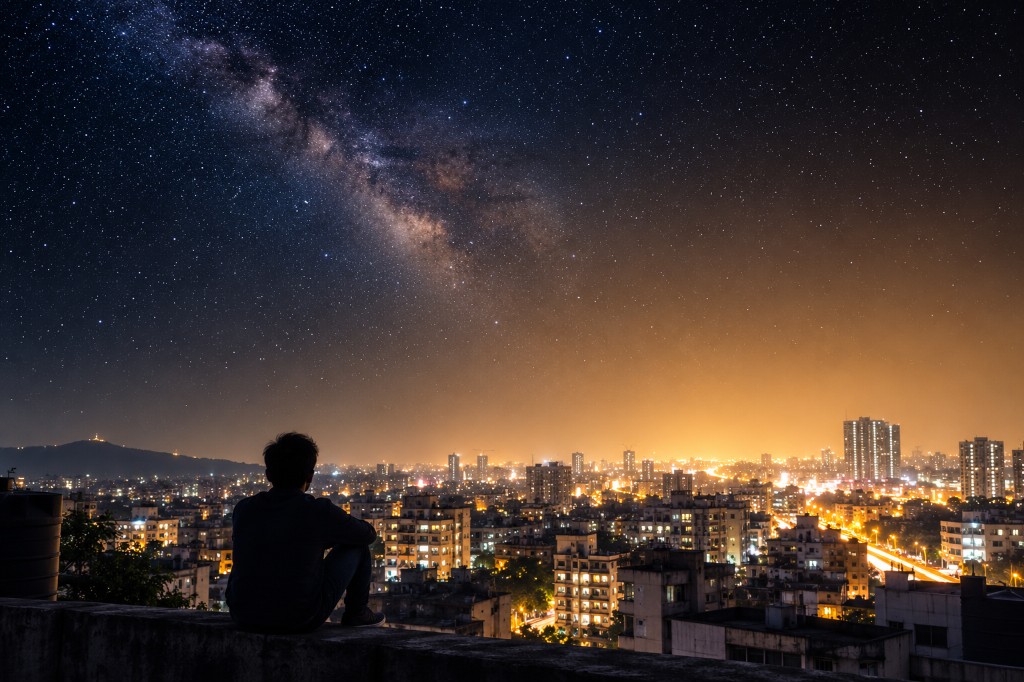

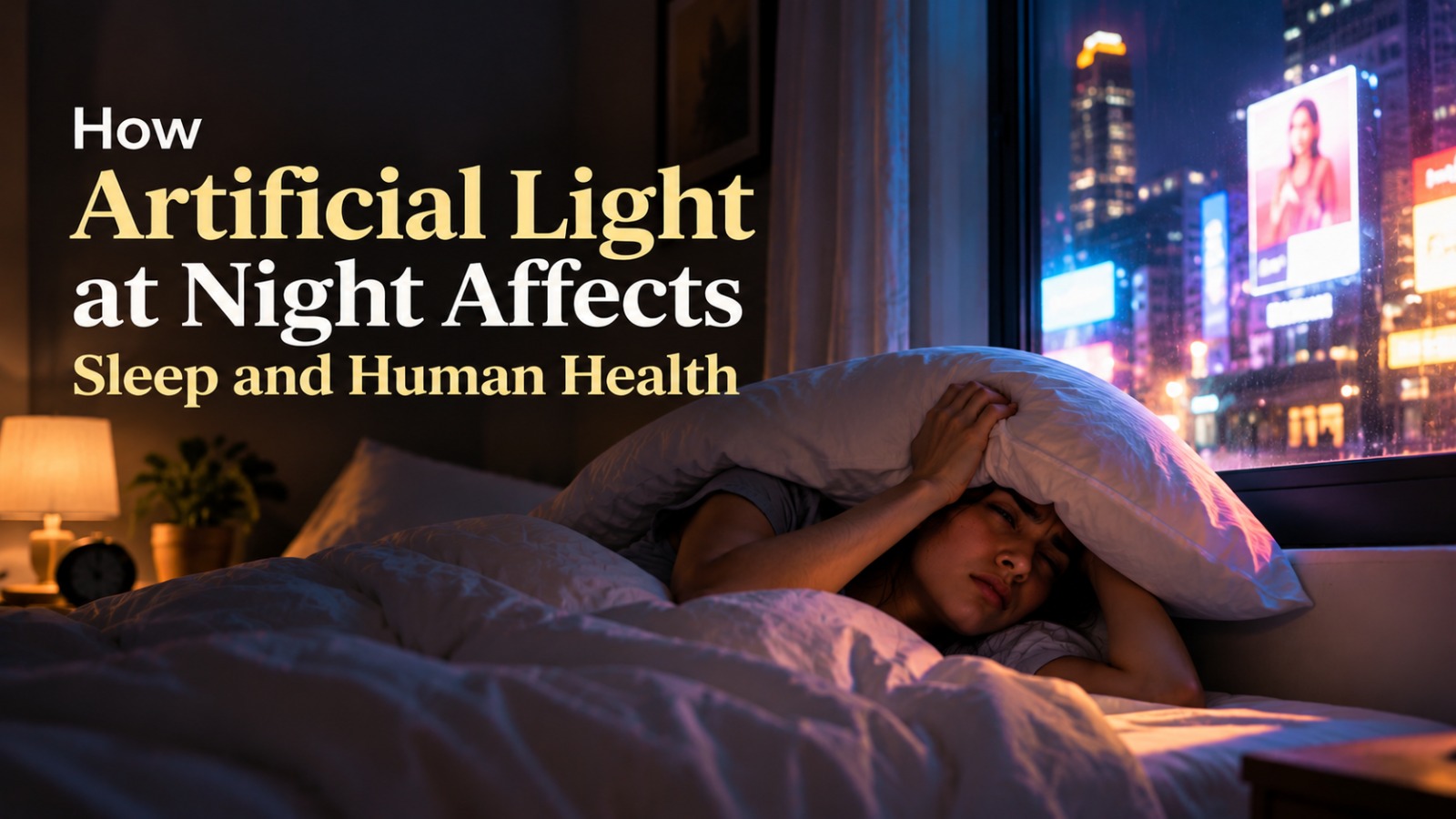
The light that keeps your nights bright might be disturbing the sleep your body needs.
Artificial lighting has made our lives easier, but too much light after sunset may affect our natural sleep patterns and overall well-being. Bright streetlights, illuminated hoardings, buildings, mobile phones, televisions, and bedroom lights expose us to artificial light when our bodies naturally expect darkness.
We often think of pollution as dirty air, contaminated water, or plastic waste. But there is another form of pollution that surrounds us every night: light pollution.
At Save Darkness Organization, we believe that protecting natural darkness is not just about preserving the night sky; it is also about creating healthier environments for people.
1. Why Does Our Body Need Darkness?
Our bodies follow a natural 24-hour cycle called the circadian rhythm. It helps regulate when we feel awake, when we feel sleepy, and several other biological processes.
- Melatonin production: As it gets darker, our brain releases melatonin, a hormone that helps prepare the body for sleep.
- Natural body clock: Darkness helps signal that it is time to rest, while daylight helps us stay alert.
- Healthy sleep patterns: Regular cycles of light and darkness help maintain our natural sleep-wake rhythm.
In simple words, our bodies are designed to respond to the natural changes between day and night. Too much artificial light after sunset can interfere with these signals.
2. How Artificial Light Disrupts Sleep
Have you ever struggled to fall asleep while scrolling through your phone or because a bright streetlight shines through your bedroom window?
Artificial light at night can affect how easily we fall asleep and how well we rest.
- Delayed sleep: Bright light in the evening can make the body feel less ready for sleep.
- Reduced sleep quality: Unwanted light in the bedroom may disturb a comfortable sleeping environment.
- Blue-rich light: Light from phones, tablets, computers, and some LED sources can influence the body's internal clock, particularly when exposure is bright or close to bedtime.
- Irregular sleep schedules: Staying exposed to bright light late at night can encourage later bedtimes and disrupt regular sleep routines.
The effects depend on the brightness, colour, timing, and duration of the light.
3. What Does Scientific Research Say?
A review published in Environmental Research in 2023 examined 51 epidemiological studies investigating outdoor artificial light at night and human health.
The researchers reported associations between nighttime light exposure and several health outcomes, including:
- Sleep and circadian rhythm disturbances.
- Cardiovascular health conditions.
- Certain cancers.
However, these findings do not prove that artificial light directly causes every condition examined. Many studies faced limitations in measuring actual light exposure and accounting for other factors, such as lifestyle, shift work, and neighbourhood conditions.What does this mean for us? Research clearly shows that light can influence sleep-related biological processes. The possible effects on long-term health are still being investigated.
4. Potential Effects on Human Health
Sleep is essential for the body and mind. When our sleep is repeatedly disturbed, it can affect our daily lives in several ways.
- Concentration and memory: Poor sleep can make it harder to focus, learn, and remember information.
- Mood and emotions: Insufficient sleep can contribute to irritability, stress, and difficulty managing emotions.
- Metabolic health: Researchers are studying links between circadian disruption, blood sugar regulation, and other metabolic problems.
- Heart health: Some studies have found associations between nighttime light exposure and cardiovascular conditions, although other contributing factors mast be considered.
- Mental well-being: Disturbed sleep is associated with mental health difficulties, but artificial light is only one of several factors that may contribute.
It is important to remember that exposure to a phone screen or streetlight does not automatically mean someone will develop a health problem. The goal is to reduce unnecessary exposure and support healthy sleep habits.
5. Why Children and Older Adults Need a Healthy Sleep Environment
A peaceful, dark sleeping environment is important at every stage of life.
- Children: Bright screens late at night may delay bedtime and make it harder to settle down for sleep.
- Students: Poor sleep can affect concentration, learning, memory, and performance during the day.
- Working adults: Late-night screen use and irregular sleep schedules can contribute to tiredness and reduced alertness.
- Older adults: Changes in natural sleep patterns can make a comfortable, low-disturbance sleeping environment particularly helpful.
Maintaining regular sleep timings and reducing unnecessary light before bedtime can help people of all ages develop healthier routines.
6. How Can We Reduce Nighttime Light Exposure?
The good news is that reducing light pollution does not require expensive equipment or major lifestyle changes. Small steps at home and in our communities can make a difference.
- Dim lights before bedtime: Use softer lighting during the evening instead of unnecessarily bright lights.
- Keep bedrooms dark: Use curtains or blinds to block streetlights and illuminated signs.
- Limit bright screens: Reduce unnecessary phone, tablet, and television use before sleeping. Try to avoid screens during the hour before bedtime.
- Choose warm-coloured lighting: Warm-white lights, around 2700K–3000K where appropriate, can be a good choice for evening use.
- Switch off unnecessary lights: Turn off decorative lights and unused indoor and outdoor lighting.
- Use shielded outdoor lights: Direct light downwards rather than towards bedroom windows or the night sky.
- Maintain a regular sleep schedule: Try to sleep and wake up at consistent times.
- Balance darkness with safety: Keep adequate lighting in stairways, passages, and other areas where visibility is necessary.
These changes can reduce avoidable nighttime light exposure and help create a more comfortable environment for sleep.
7. Why Protecting Natural Darkness Matters
Light pollution is not only an environmental concern; it can also affect our relationship with sleep and the natural day-and-night cycle.When our cities remain brightly illuminated long after sunset, we lose the natural darkness that helps regulate our biological rhythms. By using light more responsibly, we can reduce unnecessary illumination while still meeting our needs for visibility and safety.
Protecting darkness means:
- Supporting healthier sleeping environments.
- Reducing unnecessary artificial light at night.
- Preserving natural night skies.
- Encouraging responsible lighting practices in homes, businesses, and public spaces.
Conclusion: Protect Darkness for Better Sleep
Our nights do not need to be as bright as our days. Darkness gives our bodies an important signal to rest, supports our natural sleep-wake cycle, and provides a healthier balance between activity and relaxation.Although research into the long-term health effects of artificial light at night is ongoing, reducing unnecessary nighttime illumination is a practical step towards a better sleeping environment.
At Save Darkness Organization, we believe protecting the night means protecting both our natural environment and our well-being.The next time you leave a light switched on unnecessarily or scroll through your phone late at night, remember: sometimes, a healthier night begins by switching off a light.